
.svg)

As an official Rolex ambassador, Roger Federer has access to some of the most exclusive and...
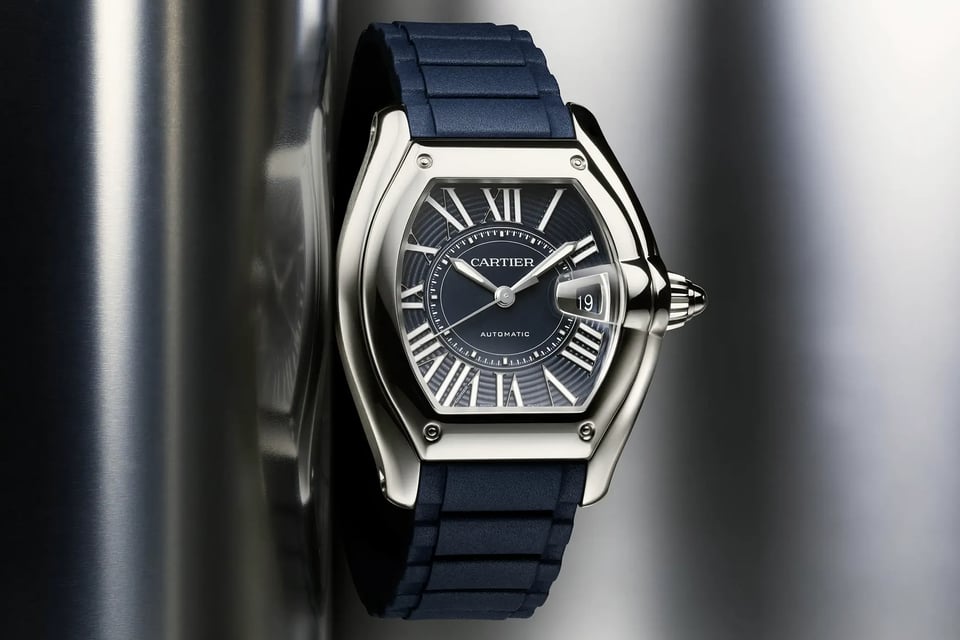 More than a decade after leaving the collection, Cartier revives the Roadster with updated proportions, modern movements and the same automotive-inspired design that defined the original.
Earlier this year, Cartier brought back one of its most distinctive modern-era designs.
Originally introduced in 2002 and discontinued a decade later, the Roadster returned at Watches & Wonders 2026 with updated proportions, modern movements and the same automotive-inspired identity that made the original so recognisable.
Part tonneau, part sports watch and unmistakably inspired by the automobile, the Roadster has always occupied an unusual position within Cartier’s collection.
The sculpted case is still there. So are the signature integrated crown and date magnifier. But the proportions, finishing and details have all been updated for a contemporary collection.
A Cartier Inspired By The Automobile
The Roadster first appeared in 2002, becoming Cartier’s first new watch collection of the 21st century.
Its inspiration came from the mechanical world, particularly the flowing forms of mid-century sports cars.
Rather than copying one specific vehicle, the design borrowed broader automotive cues: aerodynamic surfaces, dashboard-like dials and a crown shape that recalls the streamlined headlights of cars such as the Porsche 356 and Chevrolet Corvette C1.
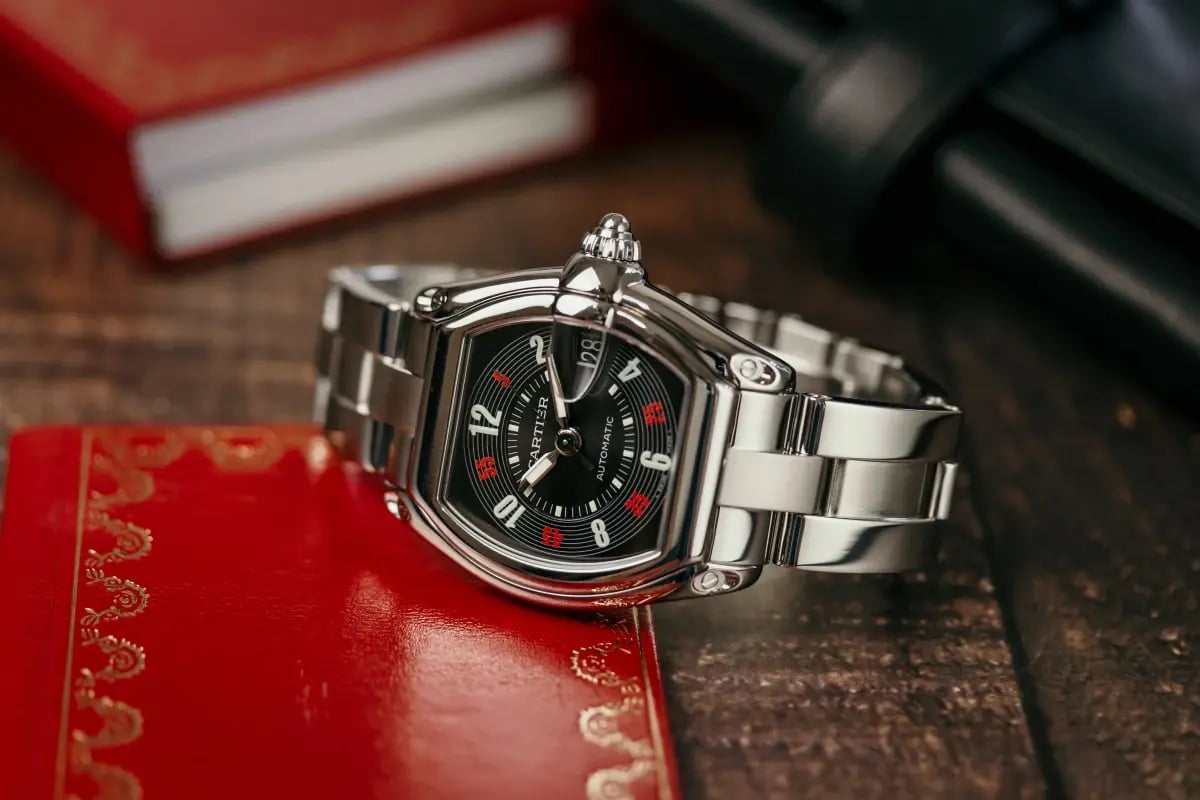 The original Roadster debuted in 2002 with a distinctly automotive identity, including dashboard-inspired dial details and its unusual integrated crown. Image: The Diamond Box
The early Roadster also departed from Cartier convention on the dial.
Instead of the maison’s usual pale background, Roman numerals and sword hands, some versions used Arabic numerals and radial markings more reminiscent of a speedometer.
That made the Roadster something unusual within Cartier: sporty, mechanical and slightly more aggressive than the Tank, Santos or Pasha.
The Return Of The Integrated Crown
The defining Roadster detail remains its crown.
On most watches, the crown is simply attached to the side of the case.
On the Roadster, it becomes part of the architecture.
The crown flows into the case and visually continues toward the date magnifier, creating one continuous sculptural form.
For the new generation, Cartier has preserved that idea but refined the execution.
The dial-side angles are broader, giving the crown assembly a more trapezoidal appearance, while the integration with the case is cleaner and more precise. A reflective surround has also been added beneath the sapphire around the date aperture.
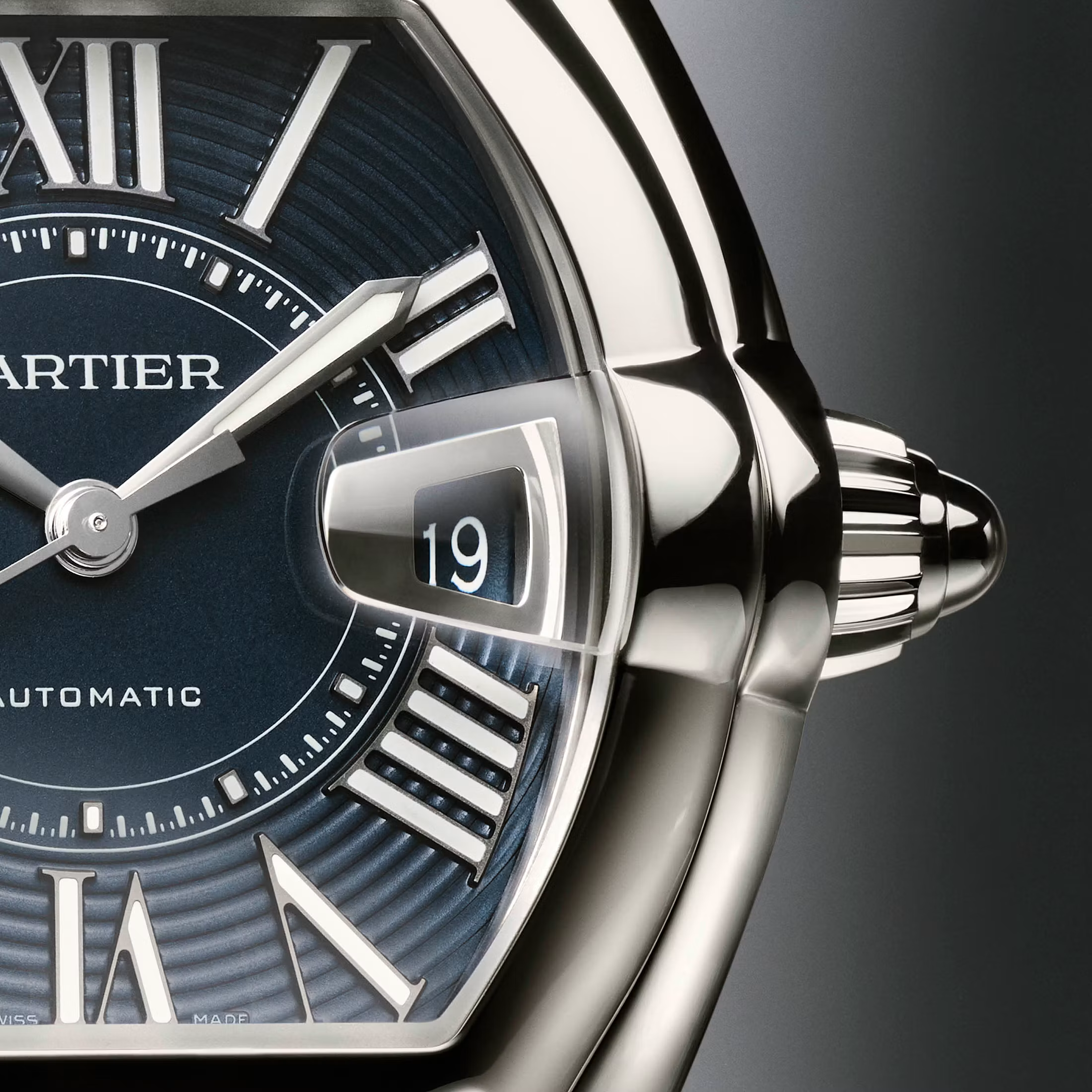 The Roadster’s defining integrated crown returns with sharper case integration and a revised surround around the date aperture.
Another subtle change involves the screws.
Where earlier Roadsters placed them into the upper surfaces of the lugs, the new version moves them onto the bezel, giving the case a cleaner profile.
Two Sizes, Three Metals
For its 2026 return, Cartier has initially focused on time-and-date models.
There are two case sizes.
The large model measures 47.2mm × 38.8mm × 10.06mm.
The medium model measures 42.5mm × 34.9mm × 9.71mm.
Because of the curved tonneau-like case, those measurements do not translate directly to the wrist in the same way as a conventional round watch.
Both sizes are offered in stainless steel, steel and yellow gold, or full 18K yellow gold.
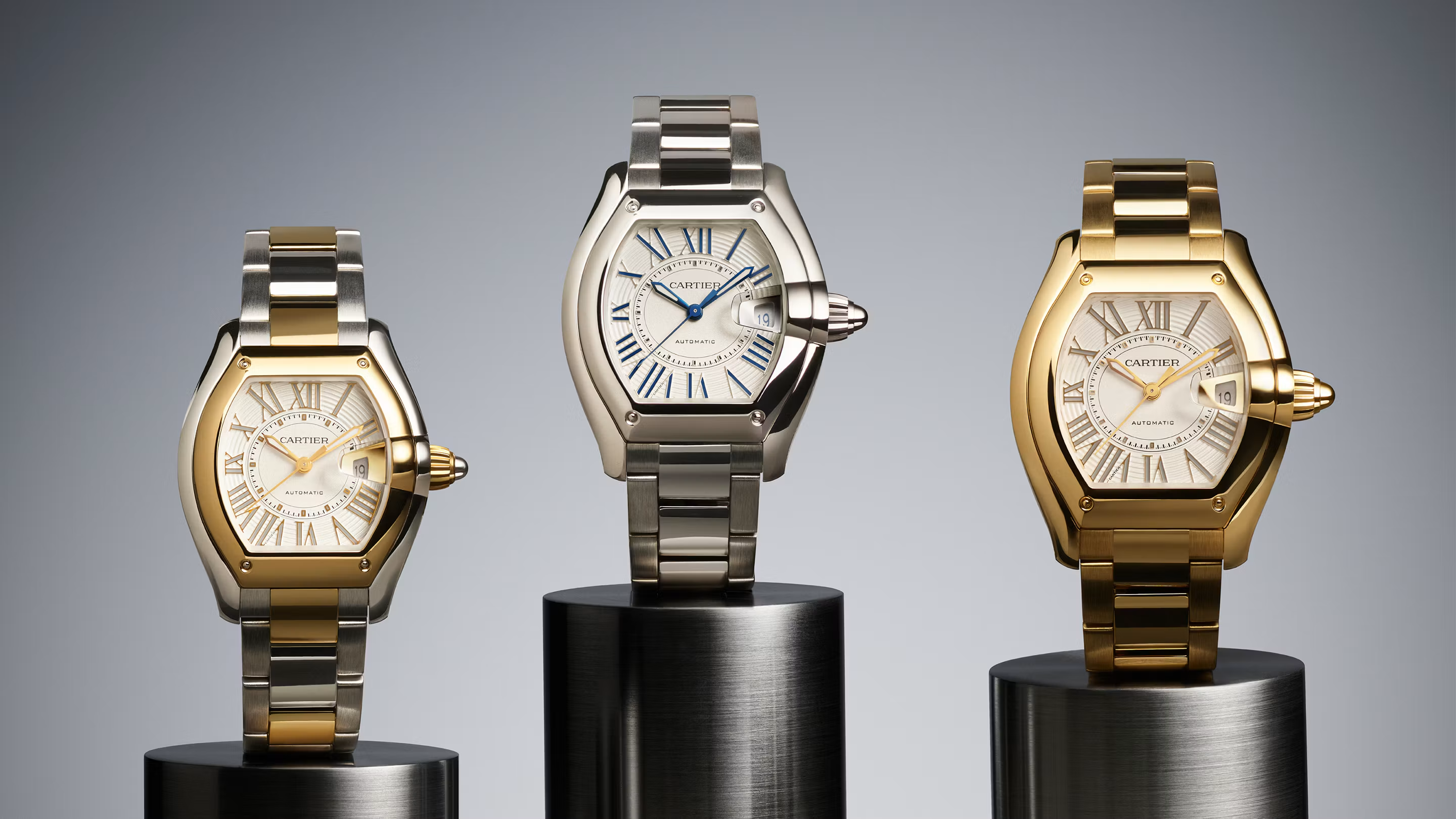 Six of the seven new Roadsters use white dials and are offered across steel, two-tone and full yellow gold.
Six of the seven models use white dials with applied Roman numerals and luminous sword-shaped hands.
All are supplied with both bracelet and leather strap options, using Cartier’s QuickSwitch system for tool-free changes.
The Blue Roadster
The seventh model is the one that immediately stands apart.
Reference WSRD0014 uses the large steel case but swaps the familiar white dial for a deep blue PVD dial.
It also comes with both a steel bracelet and a navy-blue rubber strap.
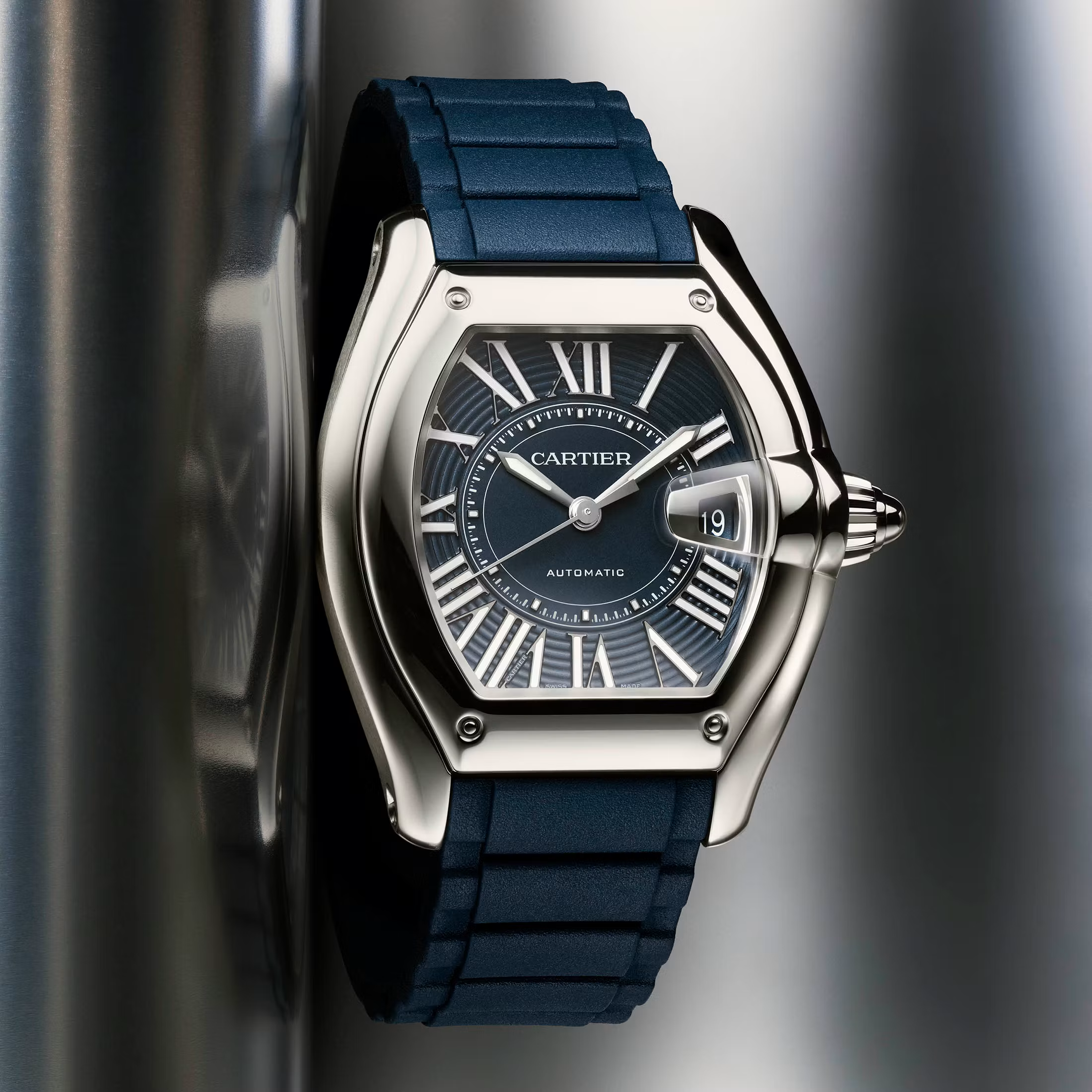 The blue-dial WSRD0014 is the sportiest version of the revived Roadster, combining steel with a matching navy rubber strap.
The dial uses silvered Roman numerals and rhodium-plated hands, with both filled with blue Super-LumiNova.
The central dial surface is matte, while the outer section has a circular striated finish intended as a subtle reference to dashboard instrumentation.
A minute track sits inside the Roman numerals, replacing Cartier’s more traditional railroad layout with differently sized hash marks and luminous indicators every five minutes.
It is recognisably Cartier, but not quite like anything else in the current collection.
Familiar Design, Modern Movements
The new Roadster is not mechanically complicated.
The larger models use Cartier’s automatic Calibre 1847 MC, with approximately 42 hours of power reserve.
The medium models use Calibre 1899 MC, with approximately 40 hours.
Both sizes display hours, minutes, central seconds and date.
Water resistance is rated to 100 metres, reinforcing the idea that the Roadster is intended as a genuine everyday Cartier rather than a traditional dress watch.
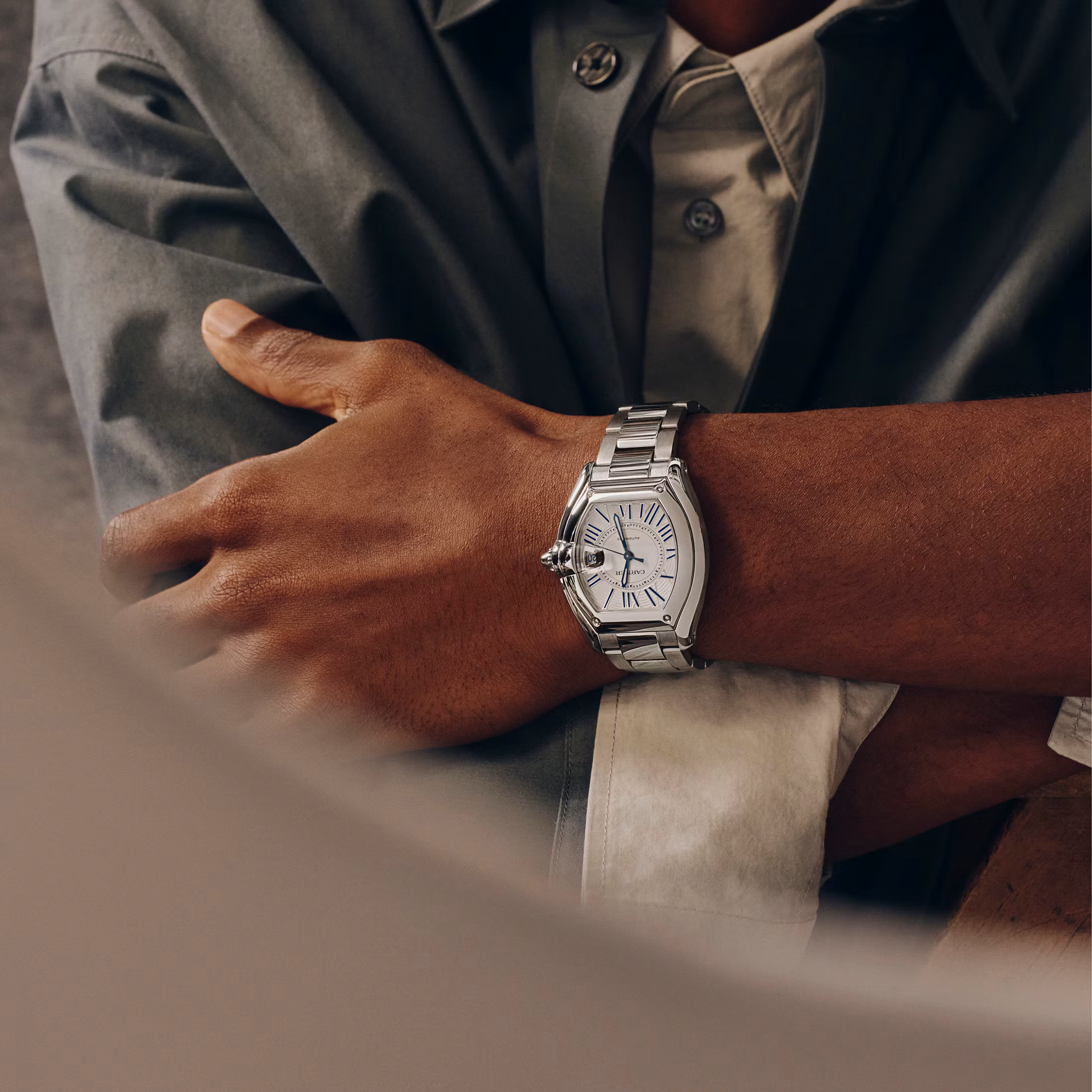 Despite its unconventional dimensions, the curved Roadster case is designed to follow the wrist closely.
Why Bring The Roadster Back Now?
The Roadster’s return fits a broader pattern at Cartier.
Over the past decade, the maison has systematically revisited several important collections from its more recent history.
The Panthère returned in 2017, the Santos was refreshed in 2018, the Pasha followed in 2020 and the Tank Française was redesigned in 2023.
Now it is the Roadster’s turn.
The strategy makes sense.
Cartier’s strength has always been its ability to create recognisable case shapes, and the Roadster already has a clear identity — one that also occupies a slightly different space from the maison’s more formal designs.
It is sportier than a Tank.
Curvier than a Santos.
And far more overtly mechanical in its inspiration than most Cartier watches.
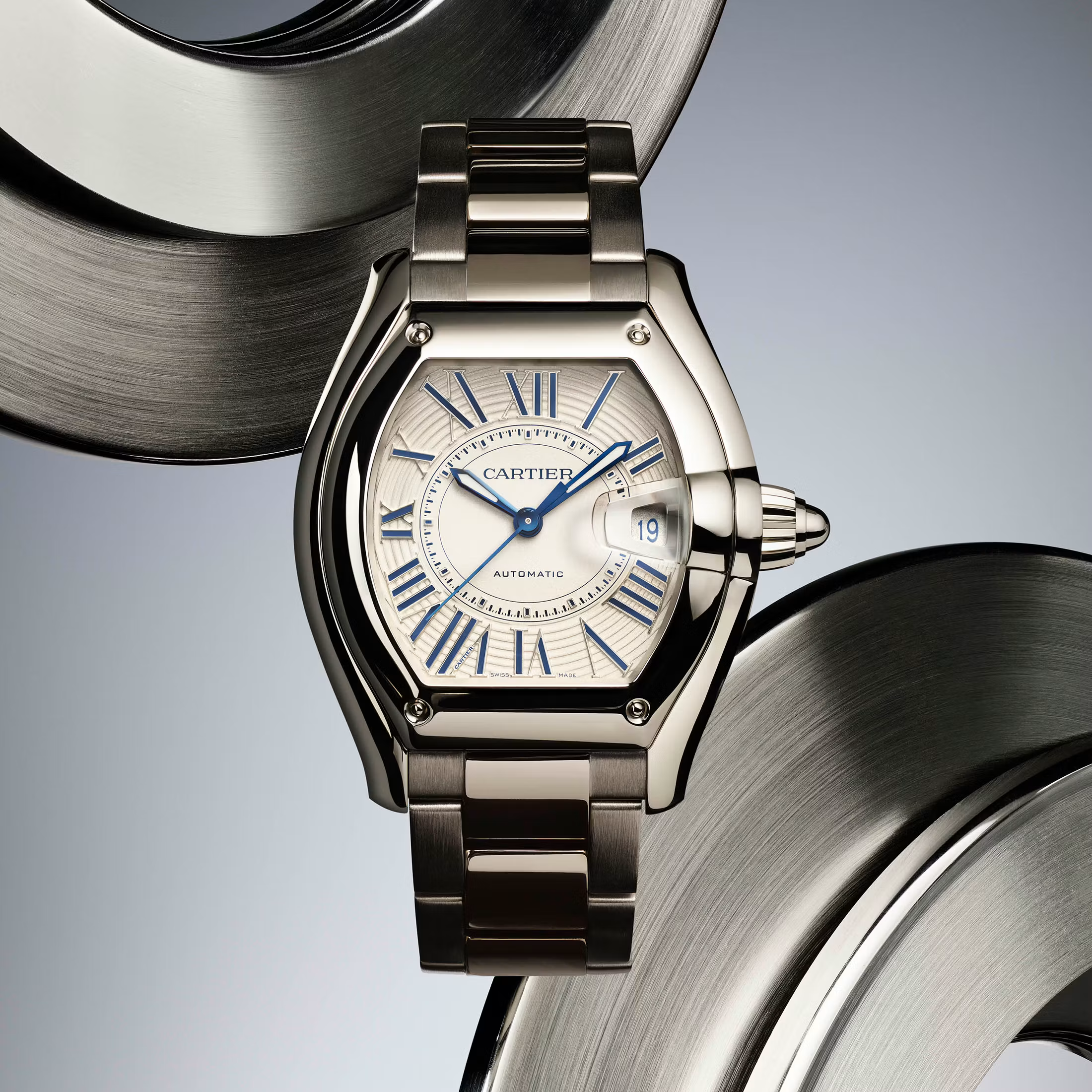 The revived Roadster sits somewhere between Cartier’s traditional shaped watches and a modern everyday sports watch.
The new collection therefore feels less like a nostalgic reissue and more like a continuation.
The Roadster was always one of Cartier’s more unconventional designs.
Fourteen years after disappearing from the catalogue, it still looks like one.
Specifications
Cartier Roadster — Large
References:
WSRD0020 — steel
W2RD0010 — steel and 18K yellow gold
WGRD0012 — 18K yellow gold
Case: 47.2mm × 38.8mm × 10.06mm
Movement: Cartier Calibre 1847 MC, automatic
Power reserve: 42 hours
Functions: Hours, minutes, seconds, date
Water resistance: 100 metres
Dial: White
Bracelet/strap: Bracelet + leather strap with QuickSwitch
Cartier Roadster — Medium
References:
WSRD0019 — steel
W2RD0009 — steel and 18K yellow gold
WGRD0011 — 18K yellow gold
Case: 42.5mm × 34.9mm × 9.71mm
Movement: Cartier Calibre 1899 MC, automatic
Power reserve: 40 hours
Functions: Hours, minutes, seconds, date
Water resistance: 100 metres
Dial: White
Bracelet/strap: Bracelet + leather strap with QuickSwitch
Cartier Roadster — Large Blue Dial
Reference: WSRD0014
Case: Stainless steel
Dimensions: 47.2mm × 38.8mm × 10.06mm
Movement: Cartier Calibre 1847 MC, automatic
Power reserve: 42 hours
Dial: Blue PVD
Hands/markers: Rhodium-plated with blue Super-LumiNova
Water resistance: 100 metres
Bracelet/strap: Steel bracelet + navy-blue rubber strap, QuickSwitch
Pricing starts at $9,300 for the medium steel model and $10,200 for the large steel model. The two-tone models are priced at $18,300 for the medium and $20,000 for the large, while the full yellow-gold versions are $51,500 and $57,000 respectively.