
From 20 collectors financing his first production watches to a $13.9 million auction record, the rise of F.P. Journe is one of modern watchmaking’s most remarkable stories.
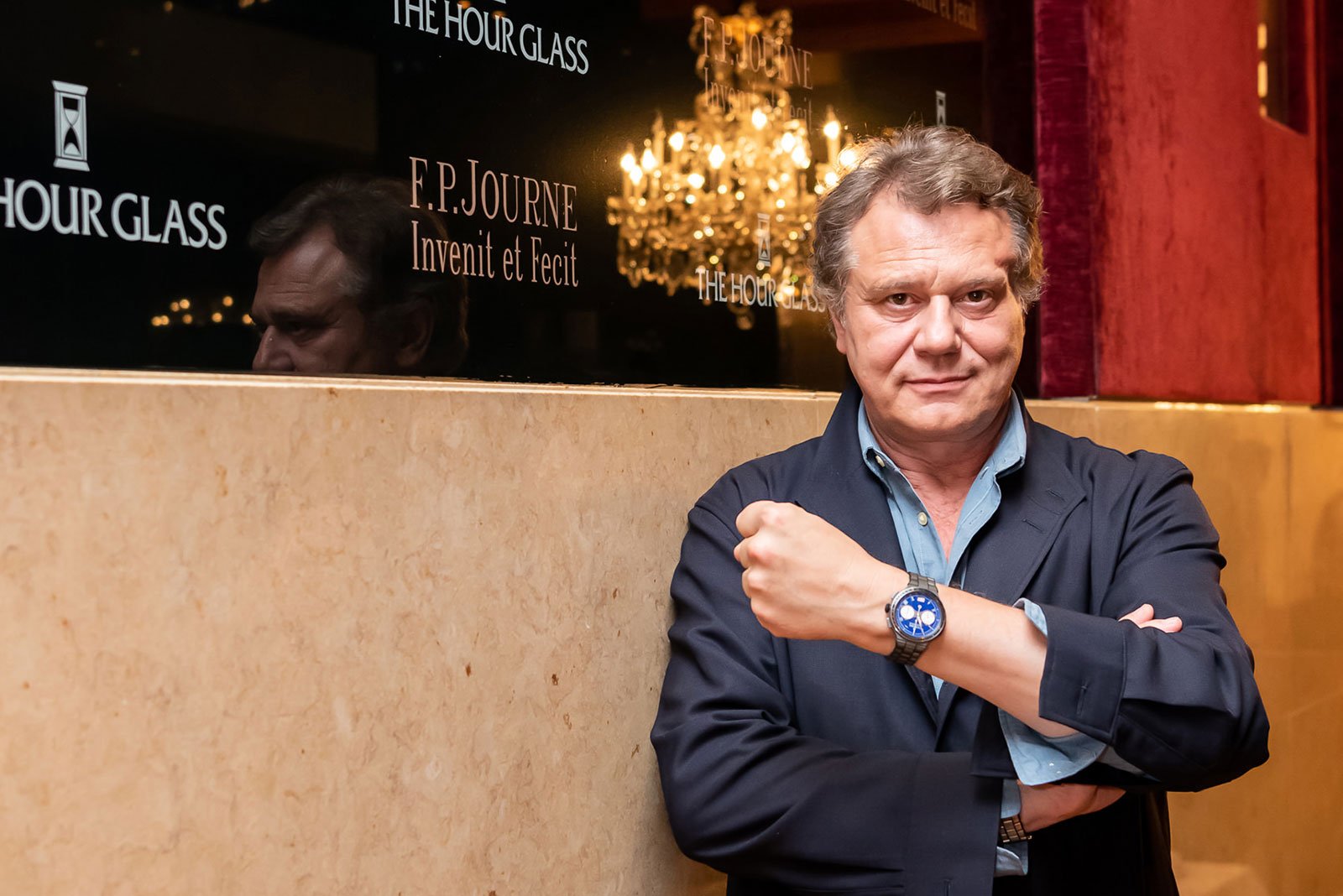 François-Paul Journe has gone from an independent watchmaker known primarily to insiders to one of the most closely followed names in modern collecting. Image source: SJX Watches.
Some luxury watch brands build their reputation over centuries.
F.P. Journe has done it in little more than a quarter of one.
Today, his watches sit in some of the world's most important collections. Production remains deliberately limited, demand exceeds supply for many references, and early examples have achieved extraordinary prices at auction.
In June 2026, an early Chronomètre à Résonance Souscription No. 007 sold at Phillips New York for $13.922 million.
The watch had been produced around 2000.
What makes that result particularly interesting is not simply the number.
It is where the story began.
Before the brand, there was the watchmaker
François-Paul Journe was born in Marseille in 1957 and trained as a watchmaker in Paris.
Early in his career, he spent years in the workshop of his uncle Michel Journe, restoring antique clocks and watches. That exposure to historic horology, particularly the work of the great eighteenth- and nineteenth-century watchmakers, would become fundamental to his own philosophy.
Long before launching a brand under his own name, Journe was already designing complicated mechanisms, restoring important historical pieces and producing unique watches.
By the 1990s, he had established a reputation among specialist collectors and within the watchmaking community.
But turning an independent watchmaker's ideas into a commercially viable manufacture required something else.
Capital.
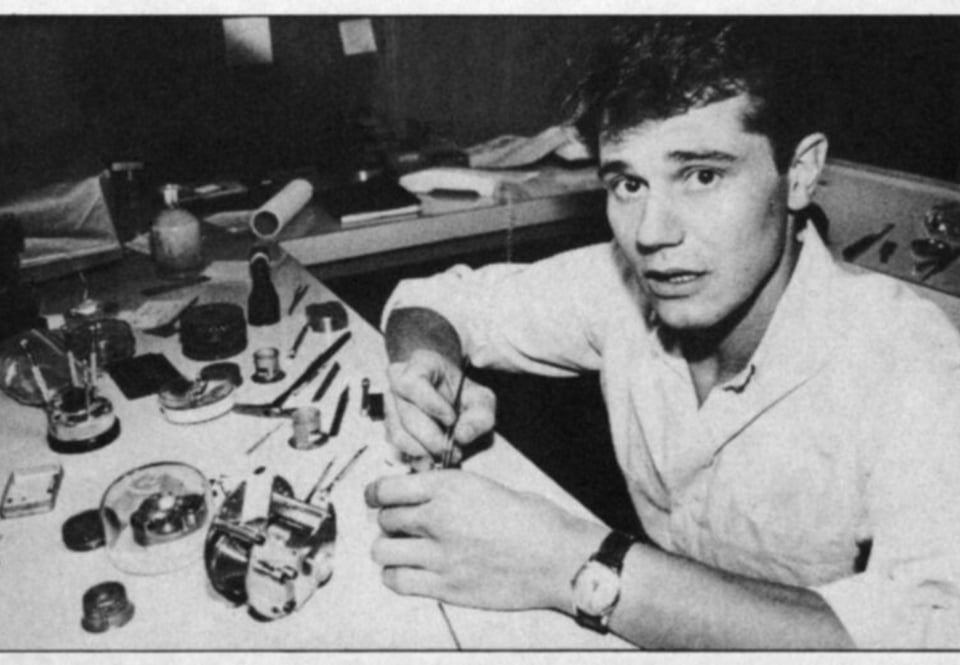 François-Paul Journe early in his career. Image source: A Collected Man
Twenty collectors helped finance the beginning
When Journe prepared to launch his own collection in 1999, he faced a problem familiar to many entrepreneurs: how to finance production.
The solution came from watchmaking history itself.
Journe adopted a souscription system inspired by Abraham-Louis Breguet.
Twenty collectors and clients committed to buying his first Tourbillon Souverain wristwatches before they had been produced. Their advance payments helped finance the workshop, tooling and components required to bring the watches to life.
Each of those first 20 Tourbillon Souverain watches was individually numbered.
The concept was remarkably simple:
Collectors supplied capital based largely on their belief in the watchmaker and what he intended to create.
Those collectors were not purchasing an established global luxury brand.
They were backing a person, an idea and a standard of watchmaking.
In retrospect, those first watches became some of the most historically important pieces F.P. Journe ever produced.
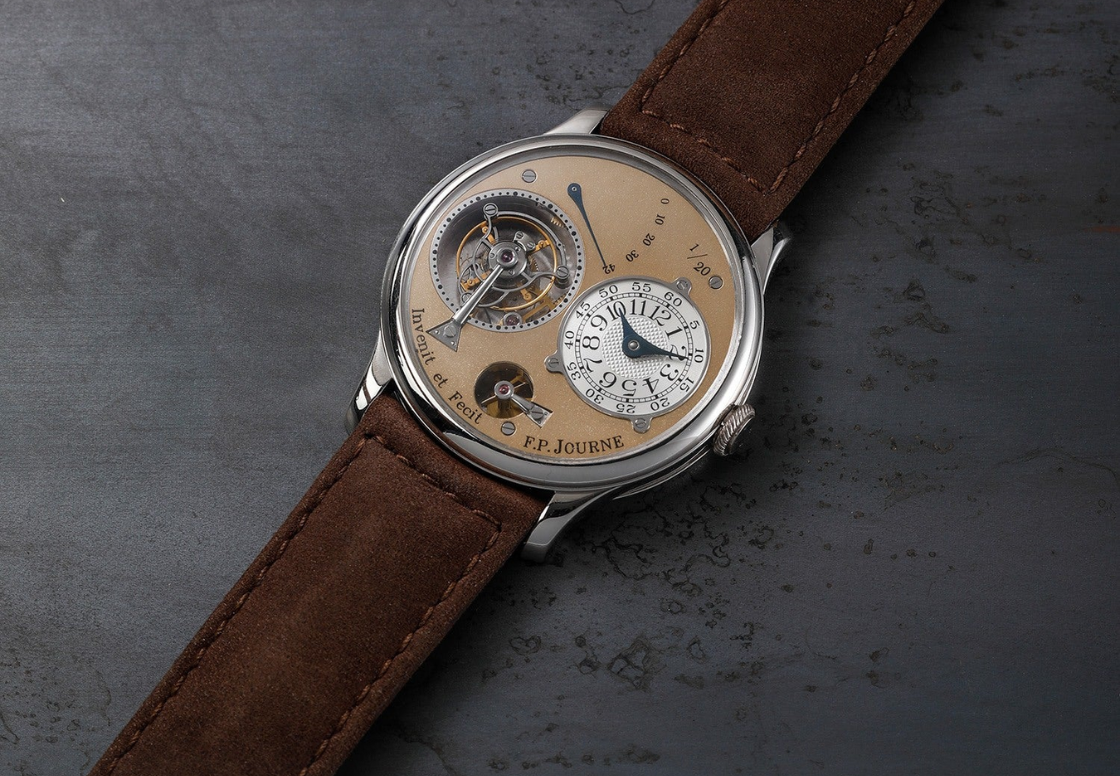 F.P. Journe's first 20 production tourbillons were sold through a subscription system that helped finance the launch of his manufacture. Image source: Phillips Watches.
“Invenit et Fecit”
When Journe presented his first collection in 1999, his watches carried a Latin phrase that remains on his watches today:
Invenit et Fecit.
Invented and made.
The words express one of the principles at the heart of F.P. Journe.
Rather than simply styling watches around existing movements, Journe develops his own mechanical concepts and calibres. Over time, the manufacture has also brought significant parts of production under its own control, including movement components, dials and cases.
The philosophy helps explain why collectors often view F.P. Journe differently from conventional luxury watch brands.
The product is closely connected to the individual watchmaker behind it.
That relationship is increasingly rare as much of the luxury industry becomes larger, more consolidated and more corporate.
Scarcity by design
F.P. Journe has grown significantly since 1999, but it remains a small manufacturer by Swiss watch-industry standards.
The company itself has described annual production at approximately 900 mechanical watches.
That is not simply the consequence of being unable to manufacture more.
In 2023, when F.P. Journe opened new production facilities for its dial and case workshops, the company explicitly stated that the investment was intended to improve quality and working conditions rather than increase production.
For comparison, the largest Swiss manufacturers produce watches in quantities measured in hundreds of thousands—or even more than a million—per year.
F.P. Journe operates on a fundamentally different scale.
Scarcity, however, is only valuable when it is accompanied by demand.
And over the past decade, collector demand for F.P. Journe has changed dramatically.
When the secondary market catches up
One of the clearest indications of that shift can be seen in auction results.
Early brass-movement Journe watches, Souscription pieces and unusual configurations have become particularly important within the collector market.
The most dramatic example arrived in June 2026.
Phillips offered Chronomètre à Résonance Souscription No. 007, one of the first 20 examples produced for the collectors who had supported Journe's earliest watches.
The estimate was in excess of $1 million.
The final price was:
$13,922,000.
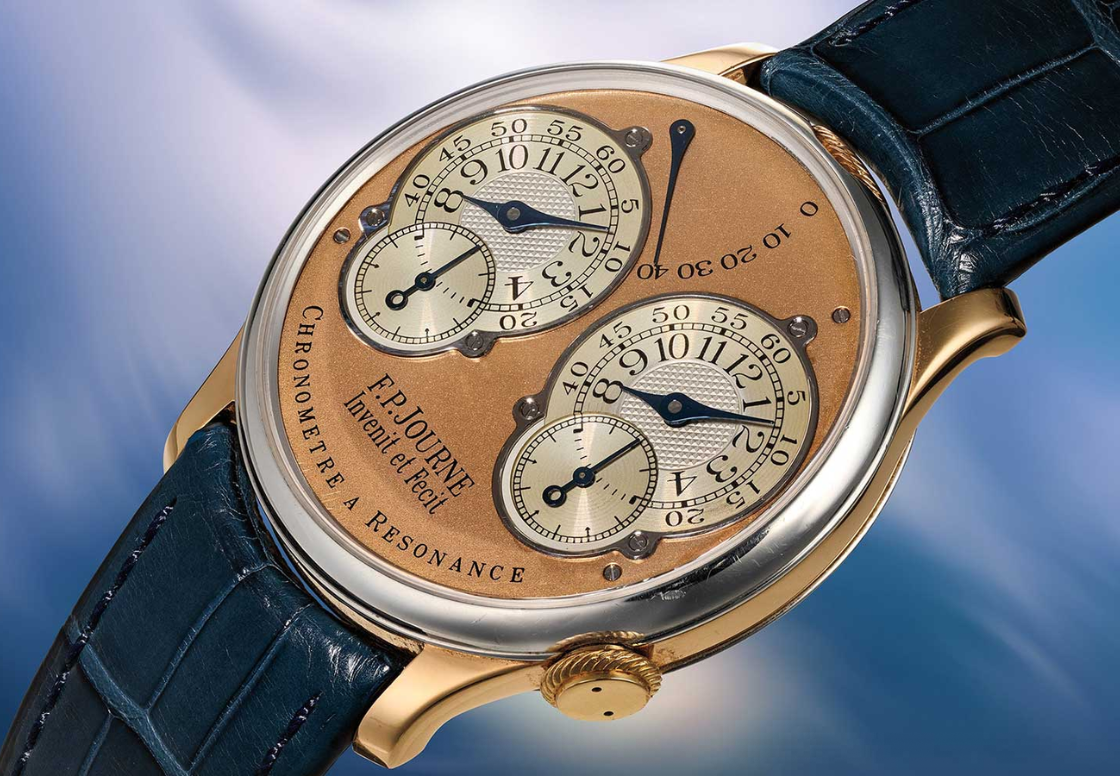 This F.P. Journe Chronomètre à Résonance Souscription No. 007 sold for $13.922 million at Phillips New York in 2026. Image source: Phillips Watches.
That result followed another remarkable sale only months earlier.
In December 2025, the unique FFC prototype created through a collaboration between François-Paul Journe and filmmaker Francis Ford Coppola sold at Phillips for $10.8 million, setting a world auction record for F.P. Journe and, at that time, for a watch by an independent watchmaker.
The record lasted only months.
For a company founded in 1999, the speed of that development is extraordinary.
What creates collector value?
It would be tempting to explain the rise of F.P. Journe purely through scarcity.
But scarcity alone does not make something desirable.
Many watches are rare.
Far fewer inspire the level of collector conviction seen around F.P. Journe.
Several factors come together:
- A clearly identifiable watchmaker behind the brand.
- Original mechanical ideas and recognisable design.
- Very limited production.
- Strong control over manufacturing.
- Important early references with genuine historical significance.
- A comparatively young but increasingly well-documented collector culture.
- A supply of desirable watches that remains small relative to global demand.
Most importantly, the watches have developed credibility among serious collectors before becoming broadly fashionable.
That distinction matters.
Markets built principally around hype can change quickly. Collector markets rooted in craftsmanship, provenance, rarity and historical importance tend to behave differently.
That does not mean prices can only rise. Watches remain discretionary assets, and secondary-market values can fluctuate considerably.
But F.P. Journe provides an interesting example of how collector conviction can gradually become reflected in financial value.
Watches as assets — without forgetting what they are
The rise of F.P. Journe also illustrates the increasingly complex position that exceptional watches occupy.
A watch can simultaneously be:
A functional object.
An expression of craftsmanship.
A collectible.
A store of significant value.
And, in certain cases, an asset worth millions.
That does not mean watches should automatically be treated as investments. Future values can never be guaranteed, and the difference between references, condition, provenance and purchase price can be enormous.
But once collections reach substantial values, the financial dimension becomes difficult to ignore.
Collectors may have significant amounts of capital tied up in watches they have no intention of selling.
This is where the distinction between owning an asset and having capital available becomes relevant.
At Yourasset, we regularly see customers who are passionate about their watches but also think carefully about liquidity and capital allocation.
The two ideas do not conflict.
A collector can genuinely love an asset while still considering how efficiently capital is deployed around it.
The collectors who believed first
There is an interesting symmetry in the F.P. Journe story.
At the beginning, a small group of collectors provided capital because they believed in a watchmaker before the broader market did.
More than 25 years later, watches connected to those earliest supporters have become some of the most valuable modern timepieces ever sold.
The Chronomètre à Résonance that achieved $13.922 million in 2026 belonged to that Souscription lineage.
The capital came first.
The recognition came later.
Of course, nobody in 1999 could have known what those watches would eventually become worth.
That uncertainty is part of what makes the story so compelling.
The first collectors were not responding to an auction record, a celebrity endorsement or an established secondary-market premium.
They were responding to the watchmaking.
And in the case of François-Paul Journe, the market eventually followed.